Membrane Polymers
Many synthetic membranes are made of polymers. A polymer is composed of giant molecules (macromolecules) consisting of repeating units.
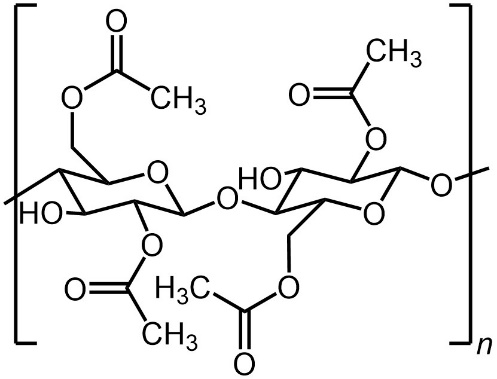
CELLULOSE ACETATE
Cellulose acetate is a chemically modified natural polymer. Cellulose is obtained from wood and green plants. The acetate ester of cellulose was first prepared in 1865. Cellulose acetate is used in membranes for reverse osmosis (seawater desalination) and gas separation (CO2 removal from natural gas).
POLYSULFONE
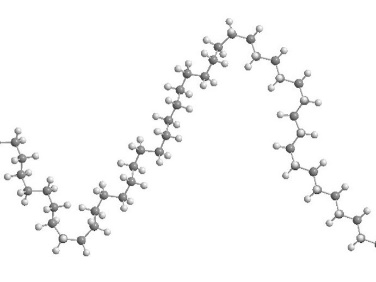
Polyarylethersulfone (often just called “polysulfone”) is a glassy synthetic polymer. Polysulfone is used in membranes for gas separation (hydrogen recovery in ammonia production).

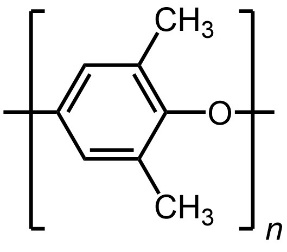
POLYPHENYLENE OXIDE
Polyphenylene oxide is a glassy synthetic polymer. Polyphenylene oxide is used in membranes for gas separation (air separation for generating nitrogen).
POLYIMIDES
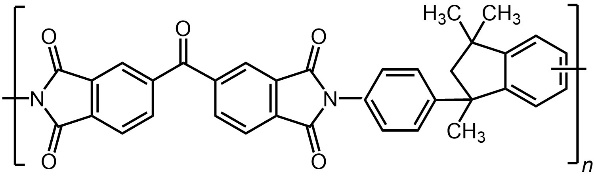
Aromatic polyimides are thermally-stable, glassy synthetic polymers. A commercial example of a polyimide is Matrimid 5218. Polyimides are used in membranes for gas separation (air separation for generating nitrogen).
SILICONE
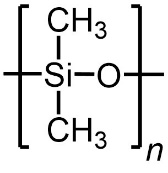
Silicone rubbers include polydimethylsiloxane (PDMS). PDMS is used in membranes for pervaporation (recovery of alcohols from aqueous mixtures).
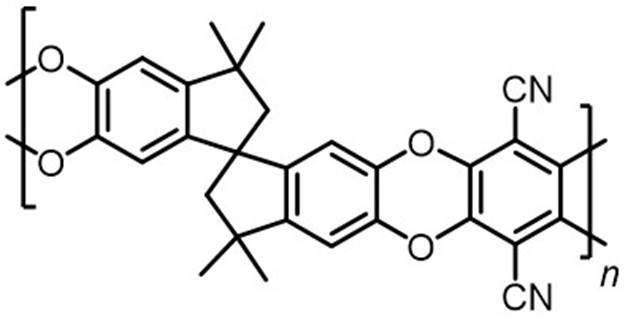
POLYMERS OF INTRINSIC MICROPOROSITY
Polymers of intrinsic microporosity (PIMs) are glassy polymers with rigid, contorted macromolecular backbones that cannot fill space efficiciently. Their high free volume gives them high permeability to gases.
The prototypical example of a PIM is referred to as PIM-1.