Membrane Transport
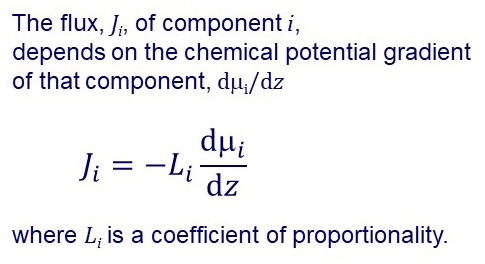
The overall driving force for permeation through a membrane is a gradient in chemical potential. There are various ways of generating a chemical potential gradient and hence a driving force for permeation.
PORE FLOW MODEL
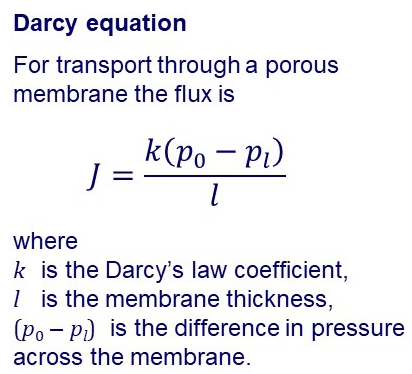
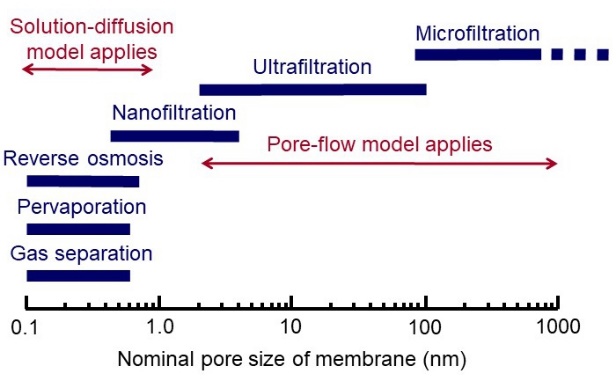
In the pore-flow model, transport of permeating species through a membrane is by pressure-driven flow through tiny pores. An equation for the flow of a fluid through a porous medium was proposed in 1856 by the French engineer Henry Darcy.
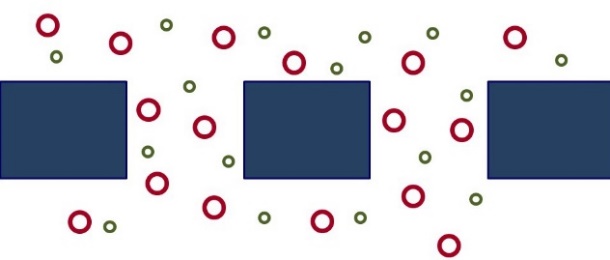
If a membrane has pores much larger than the permeating species, it is usually non-selective.
KNUDSEN DIFFUSION
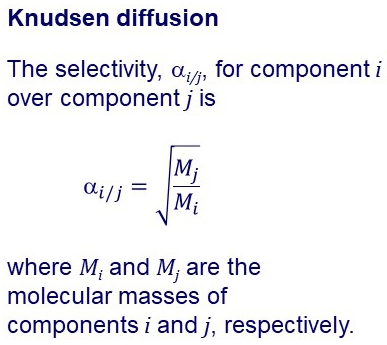
Separation of gases may occur by Knudsen diffusion when a membrane has pores big enough for the gases to enter, but smaller than their mean free path.
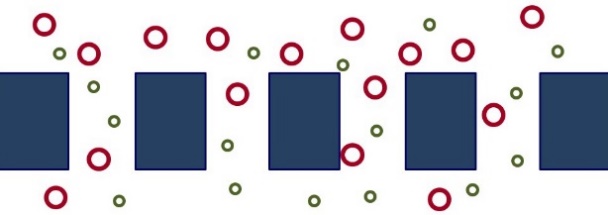
In Knudsen diffusion, gas molecules collide with the pore walls much more frequently than they collide with each other. The flux of a species is inversely proportional to the square root of its molecular mass, so lighter molecules move across the membrane faster than heavier molecules.
MOLECULAR SIEVING
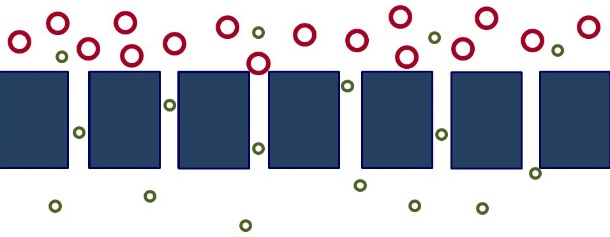
When a membrane has pores close in size to the permeating species, separation may occur because one species is filtered from pores in the membrane through which other species can move (molecular sieving).
SOLUTION-DIFFUSION MODEL
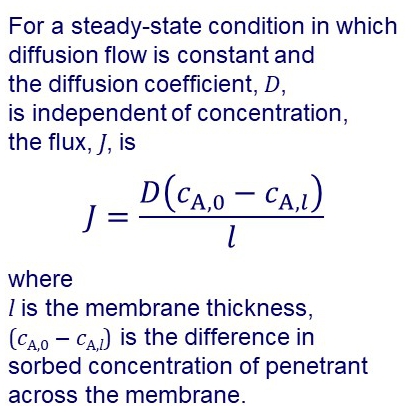
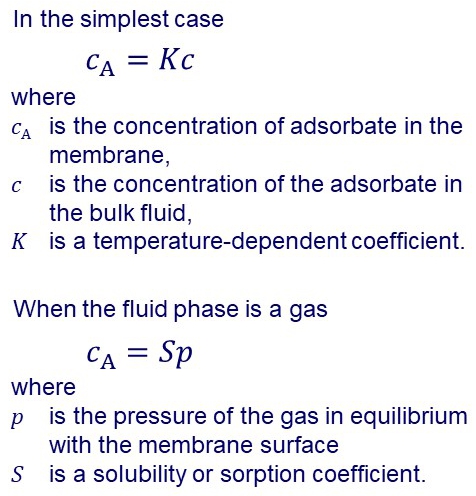
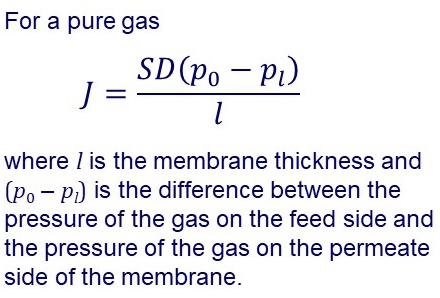
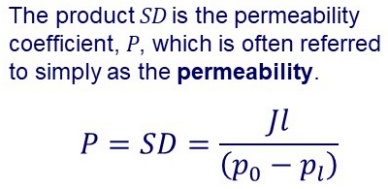
Many membranes are made of more or less “dense” materials and transport may be described by a solution-diffusion model. In the solution-diffusion model it is assumed that permeation involves: (1) Dissolution or sorption of the permeating species in the membrane on the feed side. (2) Diffusion through the membrane.(3) Desorption at the permeate side.
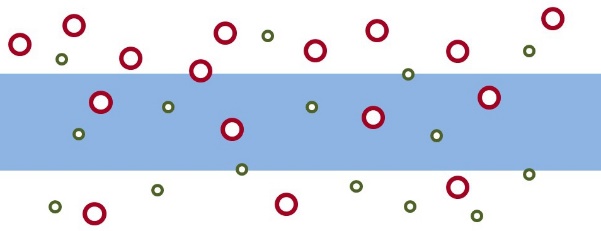
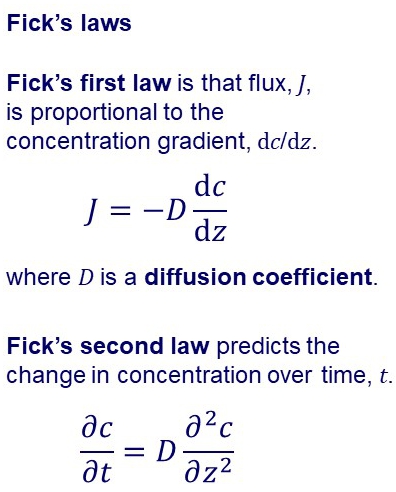
In the simplest case, diffusion through the membrane can be described by Fick’s laws.
OTHER FORMS OF MEMBRANE TRANSPORT
Other forms of membrane transport include facilitated transport, where a carrier interacts with a specific species to help transport it across the membrane.
Different models are applicable to different membrane processes.
FURTHER READING

