Pervaporation
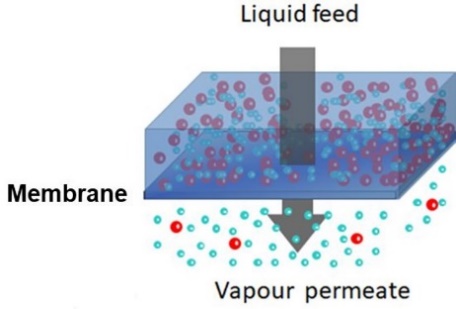
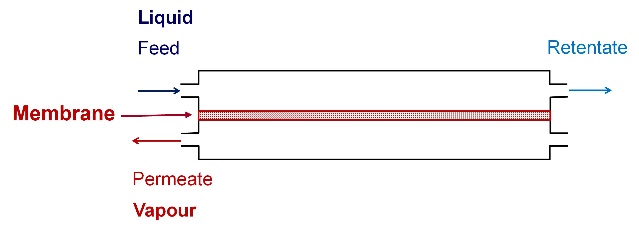
Pervaporation is a membrane process that combines permeation and evaporation. The feed is a liquid mixture. A vacuum or sweep gas is used to remove permeate as a vapour.
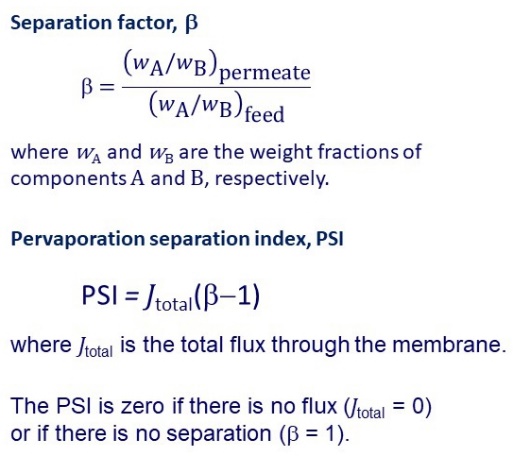
The ability of a membrane to concentrate up a component of a mixture may be expressed in terms of a separation factor. We need to achieve both a good separation factor and a high flux through the membrane. The overall performance of a membrane may be expressed in terms of a pervaporation separation index.
HYDROPHILIC PERVAPORATION
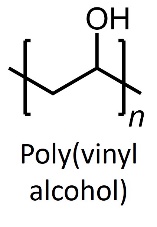
Hydrophilic pervaporation membranes are used for the dehydration of (removal of water from) organic solvents. Hydrophilic pervaporation membranes are commonly based on polymers such as poly(vinyl alcohol). Inorganic pervaporation membranes are also available.
ORGANOPHILIC PERVAPORATION
Organophilic pervaporation membranes are used for the separation of organic/organic mixtures, and for the removal of organic compounds from aqueous solution. Organophilic membrane polymers include polydimethylsiloxane (PDMS), poly[1-(trimethylsilyl)-1-propyne] (PTMSP) and polymers of intrinsic microporosity such as PIM-1.
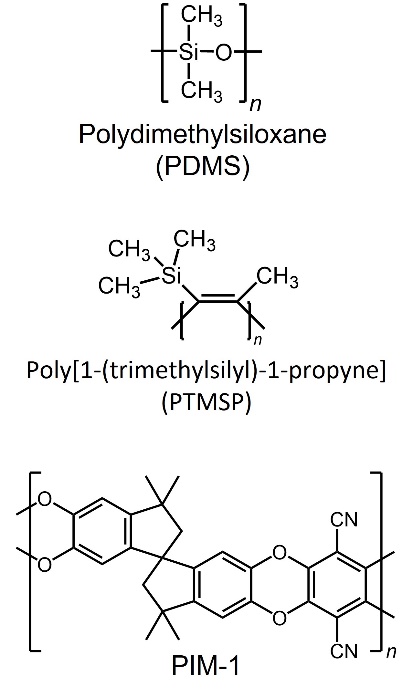
PIM-based membranes are being investigated for applications such as the recovery of biobutanol from fermentation processes.
AZEOTROPES
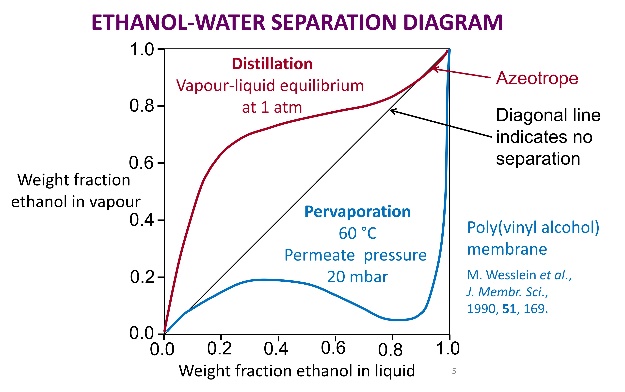
Some liquid mixtures cannot be separated by straightforward distillation because they form azeotropes. For an azeotrope, the vapour and liquid compositions are identical.
ETHANOL/WATER SEPARATION
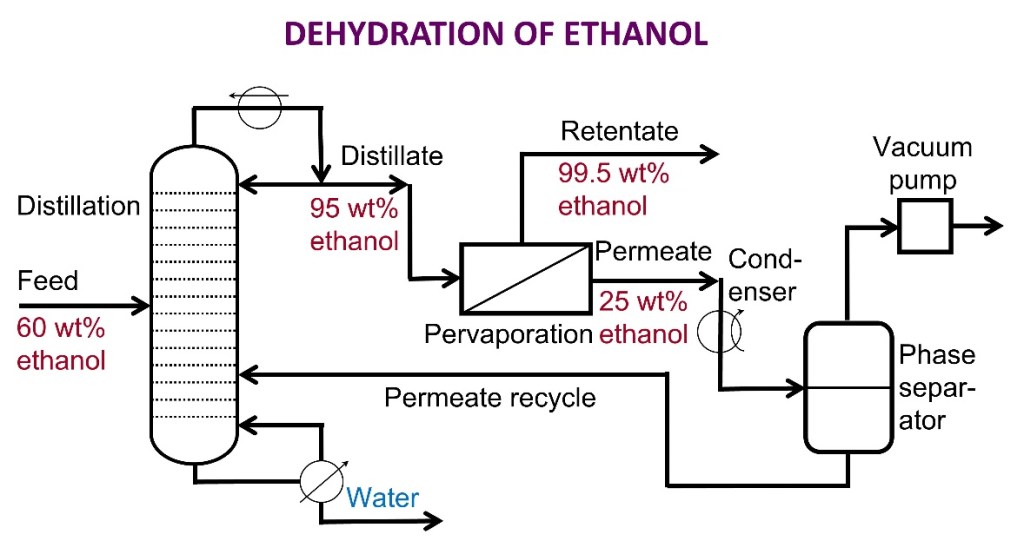
A mixture of ethanol and water forms an azeotrope that is 95.6 wt.% ethanol. Higher concentrations of ethanol cannot be obtained by straightforward distillation, but they can with a hybrid process of distillation followed by pervaporation.
To compare with simple distillation, a useful plot is of vapour composition against liquid composition, either in terms of mole fraction or of weight fraction. A diagonal line in such a plot indicates where vapour and liquid compositions are identical (no separation occurs).